


Opening
I keep returning to a quiet, uneasy thought, not because it’s clever or original, but because it refuses to loosen its grip on my mind. Our arguments feel familiar even when the language changes. Our crises arrive dressed in modern clothes, yet they seem to follow older scripts. We cycle through the same moral alarms, the same hunger for certainty, the same urge to sort, judge, and separate, as if something beneath the surface keeps guiding us back into recognizable grooves.
It’s easy to blame the moment we’re living in. Polarization. Media. Speed. Fear. Those explanations help, but they don’t quite explain why some responses feel so natural here, why punishment often feels like seriousness, and why mercy can feel vaguely irresponsible.
When I slow down and watch the patterns rather than the headlines, I don’t just see politics. I notice habits of thought. Emotional reflexes. A moral posture that seems older than any single issue and sturdier than the arguments built on top of it.
I keep thinking about the ground.
What a Seedbed Is
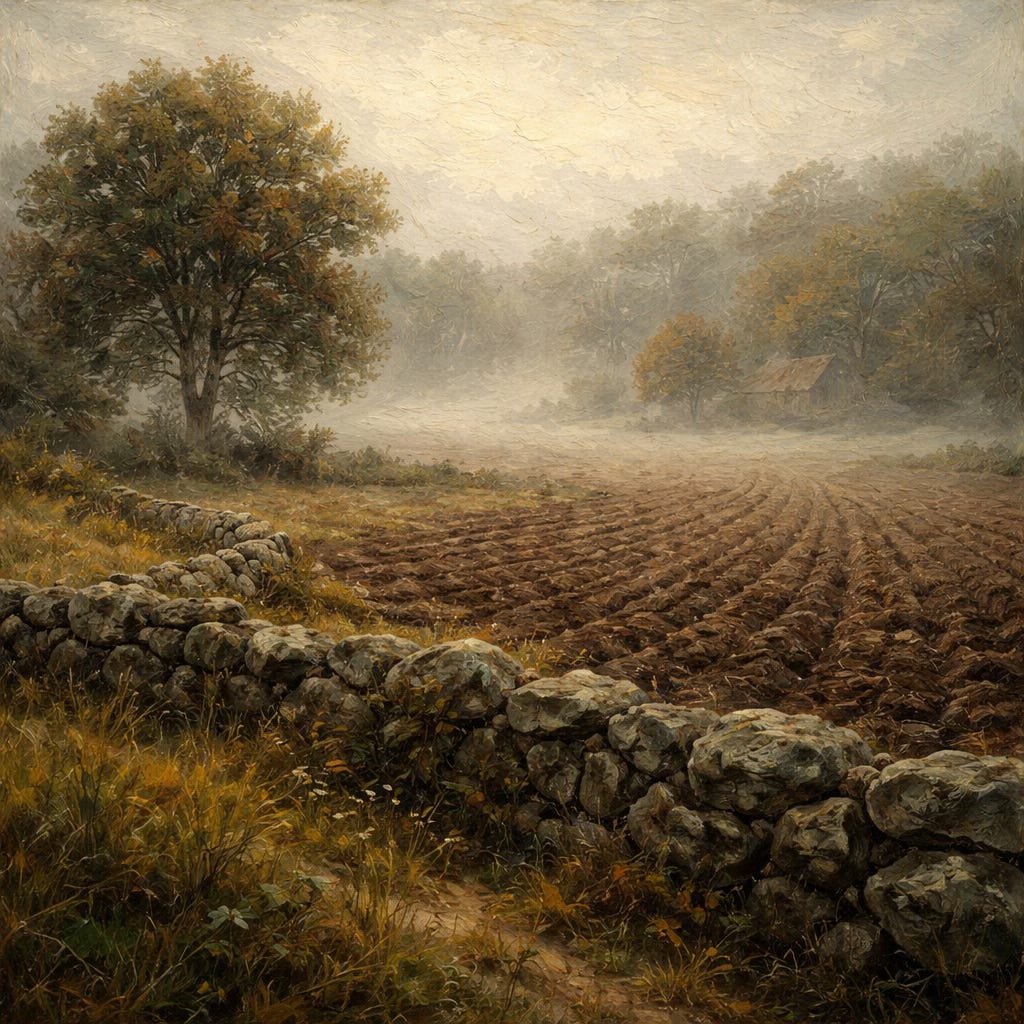
A seedbed is ground that has already been worked before anything visible appears. Soil turned over. Stones removed. The surface quiet, almost unremarkable. What eventually grows there doesn’t begin with intention in the moment of planting, but with conditions prepared long before, often by hands we no longer remember.
When we focus only on what has sprouted, the arguments, the institutions, the conflicts, we mistake growth for inevitability. A seedbed reminds us that outcomes have histories, and that some things grow easily not because they are right or necessary, but because the ground welcomes them.
This essay isn’t about results yet. It’s about conditions. About the moral soil that makes certain reactions feel obvious and others feel suspect. Before arguing about what America does, it’s worth noticing what it seems predisposed to do, and asking why.
The Ground Has a Name
That ground is not abstract. It has a history, and we can name part of it without turning it into an accusation.
In the small, precarious settlements of seventeenth-century New England, survival depended on cohesion. These communities understood themselves as moral experiments, bound together by covenant and by constant watchfulness. Behavior wasn’t merely personal. It was diagnostic. Conduct revealed standing. Failure threatened not just the individual, but the fragile health of the whole.
The Puritans didn’t see this as cruelty. They saw it as care sharpened by fear. Fear of disorder. Fear of decay. Fear that moral laxity would invite catastrophe. In a world where winters killed and settlements vanished, vigilance felt necessary. Moral seriousness felt protective.
Public examination of conduct, confession, correction, and exclusion weren’t peripheral practices. They were civic tools. Sermons shaped law. Theology shaped town life. The line between spiritual failure and social danger was thin by design.
Over generations, belief softened. Theology loosened its grip. But the emotional logic endured. Moral evaluation remained central. Worth remained something to be demonstrated. Failure continued to leave a mark.
The inheritance is not guilt. It’s formation.
How Inheritance Works When No One Is Watching
Inheritance doesn’t require belief. It doesn’t ask for consent. It works quietly, through habit and language, through what feels like common sense before it ever feels like an idea.
By the eighteenth and nineteenth centuries, long after church membership stopped defining civic belonging, the moral reflexes shaped in those early communities had migrated into secular life. The conviction that behavior reveals essence survived the decline of theology. The suspicion that failure leaves residue followed it.
Much of American moral life still carries this seriousness about worth, first forged in towns where standing was publicly weighed and quietly remembered. Moral identity was never fully settled. Reputation lingered. Redemption was conditional.
These instincts now move through courts, schools, workplaces, and public discourse as easily as they once moved through sermons. They’re no longer named as theology, but they still feel like common sense, passed along without ceremony, absorbed long before they’re questioned.
Why Sorting Feels Like Relief
In communities shaped by moral evaluation, sorting was stabilizing. It clarified boundaries. It reduced uncertainty. It told people where they stood in relation to danger.
That relief has proven durable.
There’s still comfort in moral sorting. It organizes anxiety. It places distance between us and whatever we fear becoming. In moments of stress, that sorting accelerates. Lines sharpen. Categories multiply. The world feels legible again.
Punishment fits neatly into this inheritance. From early public sanctions to later legal systems, it has signaled seriousness and reaffirmed boundaries. Even when it fails to repair harm, it succeeds at something else. It reassures us that disorder can be identified and contained.
Mercy has always been more complicated. In a moral culture shaped by suspicion of decay, mercy interrupts certainty. It blurs lines. It raises uncomfortable questions about proximity and shared vulnerability. Even now, mercy can feel less like virtue and more like risk.
I keep noticing how often we applaud accountability without asking what it’s meant to restore.
A Small, Familiar Scene
I once sat in the back of a courtroom during a routine sentencing. Nothing dramatic. No headlines. Just a brief summary of charges, a recitation of priors, a measured delivery of consequences.
What stayed with me wasn’t the severity of the sentence, but the speed. How little curiosity there was about context. How quickly a life was reduced to a pattern and that pattern to a conclusion.
No one in the room seemed cruel. The process felt efficient, almost comforting in its clarity. Walking out, I remember thinking how easily decisiveness passes for justice when the ground beneath us has been prepared, for centuries, to prefer certainty over repair.
When Watchfulness Turns Into Suspicion
Early Puritan vigilance was inward as much as outward. Self scrutiny was a moral discipline. Over time, that watchfulness externalized.
What began as communal care hardened into suspicion. The search for signs became a search for threats. In politics, disagreement started to feel like danger. In culture, difference began to look like corruption. In law, harm slowly became identity.
Once someone was marked in early New England, memory was long. That logic persists. The mark still lingers. Redemption becomes conditional. Reintegration becomes suspect.
This didn’t emerge overnight. It grew in soil where moral purity was understood as civic defense.
Not a Verdict, Just a Lineage
It’s tempting to stand outside this inheritance and condemn it. Harder to admit how reasonable it can feel from within. Harm is real. Fear is real. The desire for order is understandable.
What I keep noticing is how quickly fear translates into moral certainty, and how easily control substitutes for care. Systems built to manage risk begin to define worth. And when anxiety rises, the seedbed does what seedbeds do.
It produces familiar growth.
This isn’t a claim that America is uniquely broken or singularly harsh. It’s an attempt to trace a lineage. To notice how moral reflexes formed under specific historical pressures and then outlived the conditions that created them.
Understanding that history doesn’t dissolve responsibility. It clarifies it. It gives us language for what we’re inheriting, and therefore for what we might interrupt.
But interruption begins with seeing, and seeing requires staying with discomfort longer than feels efficient.
Coda
I don’t write this from outside the inheritance I’m describing. I’ve felt the comfort of certainty and the relief of distance. I know how reassuring it can be to believe the lines are clear and firmly drawn.
What unsettles me is not that these instincts exist, but how rarely we pause to ask what they quietly cost us, or how much of our moral imagination they consume. A seedbed doesn’t dictate what must grow. It only makes some outcomes easier than others.
The ground matters, even when we stop noticing it.
A Question for the Reader
When you feel certain that someone else’s failure defines them, what older story about worth might be quietly guiding that certainty?
Recommended Reading
For readers who want to explore the moral and historical ground beneath this essay more deeply, these works offer clarity without caricature:
The New England Mind by Perry Miller
A foundational exploration of Puritan moral psychology and seriousness.A Little Commonwealth by John Demos
A close look at how discipline, shame, and moral evaluation shaped everyday life.World of Wonders, Days of Judgment by David D. Hall
A textured account of belief, fear, and providence in early New England.The American Jeremiad by Sacvan Bercovitch
An examination of how Puritan moral language migrated into American civic culture.
Coming Next in The Puritan Spine
I keep noticing how often we talk about punishment as if it were synonymous with accountability. How quickly consequences feel like answers. How easily permanence slips into places where repair might have been possible.
The next essay begins with that unease. It looks closely at how a moral culture shaped by vigilance and evaluation came to prefer punishment over restoration, and how that preference hardened into systems that remember failure long after harm has passed.
Where this essay lingered with the ground, the next one watches what was built on it, and asks why undoing those structures has proven so much harder than building them ever was.
Support the Work
Light Against Empire is a reader-supported publication and always free. To receive new posts and support my work, consider becoming a free or donation based subscriber.
Further Reading:


These are great observations of complex behavior. I look forward to this series!