


Note: This essay piggybacks on Chris Armitage’s essay. Please read below":
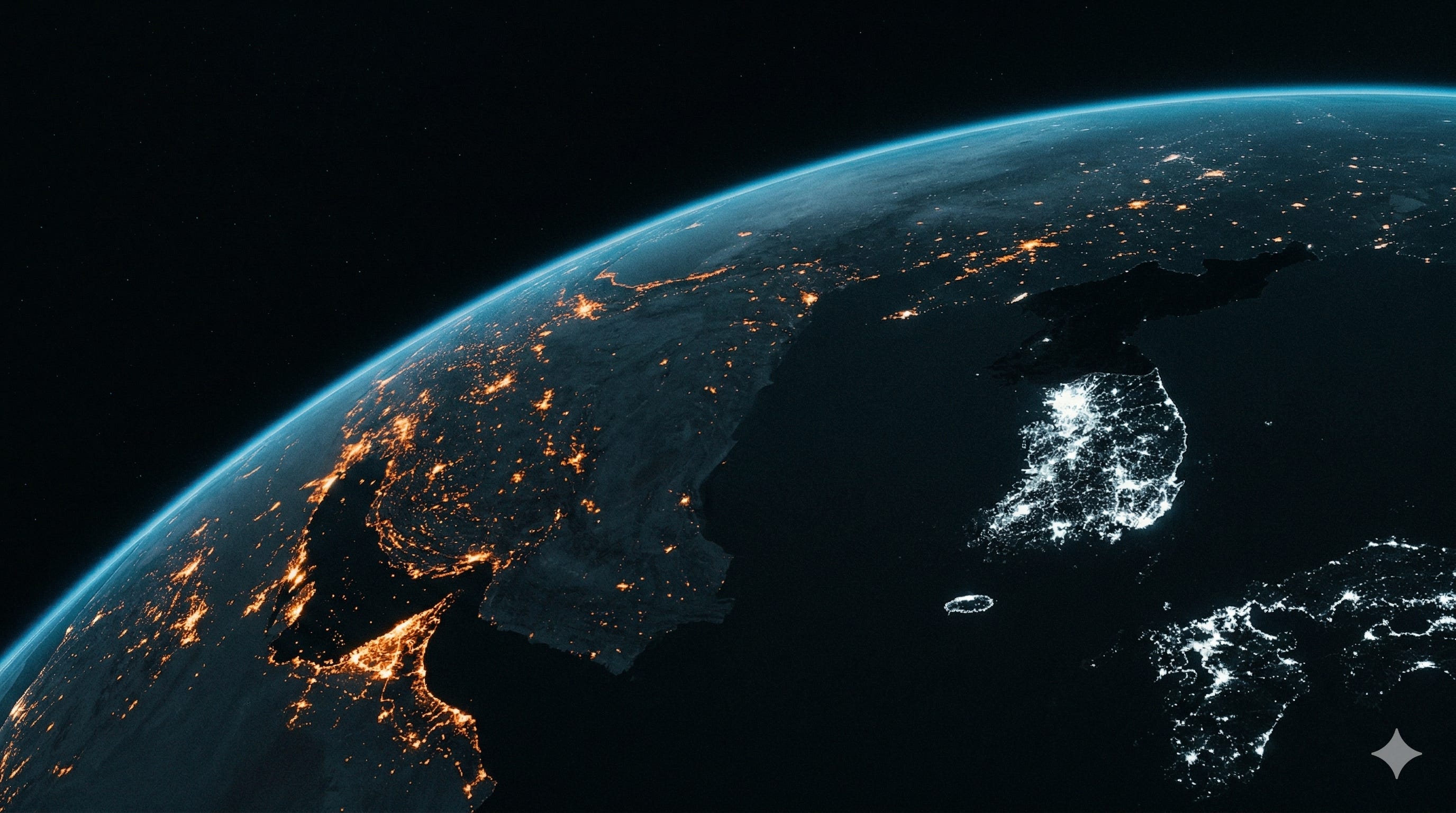

What Chris Armitage Got Right, What He Left Out, and Why the Harder Question Is in Korea
Qatar’s own government announced last week that the Gulf security arrangement is broken. Not a critic, not an adversary. The government. On the record. Dr. Majed Al-Ansari, Advisor to Qatar’s Prime Minister and Official Spokesperson for the Ministry of Foreign Affairs, said it publicly, and Chris Armitage built a piece around it that’s worth your time. The facts he marshals are solid. I checked them. The dual evacuations of Al Udeid happened. The THAAD ( Terminal High Altitude Area Defense, the U.S. Army's ballistic missile interceptor system, known as THAAD) redeployment from Korea happened. The Saudi-Pakistan mutual defense treaty happened, signed in September 2025, eight days after Israel struck Hamas officials in Doha and Gulf states started doing math they’d been putting off for years.
Where Armitage and I part ways isn’t on the facts. It’s on what the facts mean, and more than that, on what they’re being asked to prove.
He ends with an epitaph. 1945-2026, RIP US Geopolitical Military Dominance. Clean line. Gets shared. And I think it’s doing the work of a verdict where the honest thing is still a question, a harder, less satisfying question that doesn’t fit a bumper sticker but matters more if you actually want to understand what’s happening and what comes next.
So let me try to ask it.
The Qatar Story Is More Complicated Than Armitage Tells It
Armitage frames Qatar as a country putting distance between itself and American military presence because that presence stopped meaning safety and started meaning target. That’s partly right. What he skips is what Qatar’s own government said it wants instead.
Al-Ansari, the same official Armitage quotes about the breakdown of Gulf security, called explicitly for what he named a “US-plus” posture. His words: Qatar does not move away from the United States. It diversifies alongside the United States. He said it in a public webinar, two weeks ago. Qatar spent this war shooting down Iranian aircraft, dismantling IRGC spy cells inside its own borders, and asking Washington to help defend its territory. That’s a country trying to rewrite a contract while the building’s on fire. It is not a country walking out.
The distinction matters more than it might seem. Collapse and renegotiation point toward completely different futures and require completely different responses. If the arrangement collapsed, the question is what fills the void. If it’s being renegotiated, the question is who holds leverage, what terms the host nations will demand going forward, and whether Washington has the political will to show up for that conversation. Armitage’s epitaph framing, dramatic as it is, lets everyone off the hook from figuring out which problem they’re actually dealing with.
Qatar’s Prime Minister said this war must stop because everyone knows who the biggest beneficiary is. That’s not a country exiting an alliance. That’s a country telling its ally, loudly, publicly, with real anger, that the terms need to change.
What makes that renegotiation harder to manage than Armitage’s epitaph suggests is that Qatar isn’t the only one doing it. The same calculation, driven by the same root cause, is playing out simultaneously on a peninsula 5,000 miles away. And that simultaneity is what tells you this isn’t a regional story.
The Korean Peninsula
The Korea piece of this story gets a paragraph from Armitage. It deserves more, because it isn’t a subplot. It’s the same story playing in a different theater, against a different adversary, inside a different alliance, at the same time.
Here’s what actually happened. The U.S. started 2025 with roughly 600 THAAD interceptors in its total inventory. During twelve days of the June 2025 conflict with Iran, American forces fired more than 150 of them, about 25% of the entire stockpile, defending a single theater. By March 2026, with a new Iran war burning through what remained, the Pentagon began pulling THAAD components out of South Korea to cover the shortfall.
South Korea’s president said publicly he opposed the removal.
He also said the reality is they cannot fully impose their position.
Sit with that. An American treaty ally, facing an active nuclear threat from North Korea, with 28,500 U.S. troops on its soil, watched its missile defense get shipped out for a war it didn’t choose and couldn’t stop. Its president’s public response was to acknowledge he lacks the standing to prevent it. That’s not a footnote about force posture. That’s an ally telling you, out loud, what the alliance actually costs them and what they can’t do about it.
And while that THAAD was being crated up and loaded onto C-17s at Osan Air Base, North Korea was conducting missile launches at a pace that hadn’t been seen before, including systems specifically designed to defeat the kind of high-altitude interception THAAD provides. Pyongyang ran more than twenty launches in 2026 alone. The threat the system was pulled from was actively getting harder to stop, not easier. Seoul knew that. Washington knew that. The hardware left anyway.
A crisis passes. A structural condition doesn’t. When every theater simultaneously demands what was promised, and the promises exceed what any military can deliver across all of them at once, you’re not managing a bad month. You’re looking at a problem that predates the Iran war, will outlast it, and belongs to whoever sits in the Oval Office when it fully ripens.
That moment arrived on this administration’s watch, and this administration made specific choices that made it worse. That’s the charge, and it’s documented.
What This Administration Chose, and What It Cost
The June 2025 strikes on Iran were launched with Qatar actively lobbying against them. Not quietly expressing concern through back channels. Actively lobbying, publicly warning of exactly the retaliation that followed. The administration launched anyway. Qatar absorbed the consequences: an attack on Al Udeid, and months later an attack on Ras Laffan that destroyed 17% of its LNG export capacity, cost $20 billion in annual revenue, and will take three to five years to repair. The decision to strike may have been defensible on its own terms. What isn’t arguable is that the costs landed on the host nation, not on Washington. Qatar paid the bill for a decision it opposed and couldn’t stop.
The THAAD burn rate from those twelve days in June 2025 was known inside the building. The stockpile depletion was known. The decision to go back into active conflict with Iran in February 2026, with inventories already stressed, South Korea already watching, host nations already recalculating, was made by an administration that had all of those numbers in front of it. Going in blind would be one thing. Going in with the June 2025 readiness picture already on the table is another.
The structural overextension Armitage describes, too many commitments and not enough hardware to honor all of them at once, is not a Trump creation. Reagan, Bush 41, Clinton, Bush 43, Obama, Biden. Every administration added obligations. Almost none subtracted them. Nobody designed the 750-base global presence. They accumulated it, obligation by obligation, across forty years, until the whole structure required more than any country can deliver when all of it comes due at once.
What’s different is that this administration inherited a structure already under stress, was handed the June 2025 readiness numbers showing exactly how fast that stress could become a crisis, and chose to go back in. The overextension predates Trump. The acceleration of its visibility, and the specific decisions that left Qatar holding the bill and South Korea watching its missile defense leave on a cargo plane, those belong to this term. Own the cause or not. You own the consequences either way.
Something real shifted. Host nations that spent decades treating American military presence as an asset are now calculating its costs in ways they weren’t before. That calculation is happening in Doha and Seoul simultaneously, and the fact that it’s happening across theaters at the same time tells you this isn’t regional. It’s structural.
The nations doing that math right now aren’t going to stop when this administration ends. The next president inherits a Gulf shopping for a “US-plus” arrangement, a Korean peninsula that watched its THAAD leave while North Korea was running twenty-plus missile launches to exploit the gap, and an interceptor stockpile that’ll take 18 months or more to rebuild even after the shooting stops. Those are the conditions on the ground. They don’t reset on Inauguration Day.
Armitage wrote an epitaph. What he actually documented was a renegotiation in progress, conducted by the host nations, without much input from Washington, while missiles are still flying. Renegotiations have outcomes. Some of them are worse than what they replaced.
The question isn’t whether the old arrangement is gone. The question is whether anyone in Washington is paying enough attention to shape what replaces it. Everything this administration has done so far suggests the answer is no.
Friends, if my writing has been worth your time, buy me a one time ko-fi below. It goes a long way toward keeping the writing free for everyone.

Further Reading:


All true...