


Author’s Note
I come to this series as someone who was formed by Roman Catholicism and later stepped away from the institution while remaining deeply concerned with moral and spiritual life. I didn’t leave because meaning no longer mattered to me, but because honesty did. I now live as a humanist, committed to dignity, responsibility, and care, without relying on doctrine or authority to ground those commitments. This series isn’t an argument for my path, and it isn’t an argument against yours. It’s written for people who left church for serious reasons and still want to live serious lives.
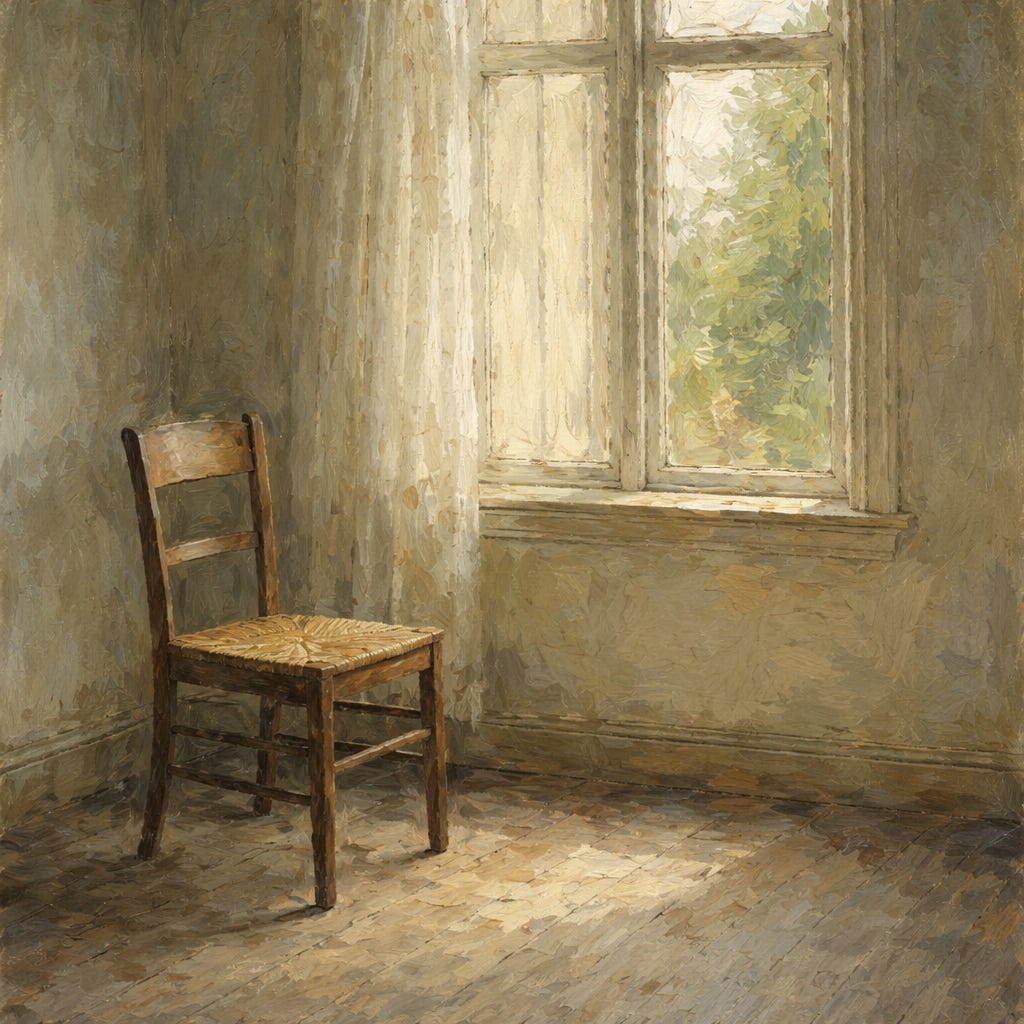
How to Acknowledge the Loss Without Second-Guessing Your Decision
This essay is part of Life After Leaving Church, a series focused on practical ways to rebuild meaning, structure, and care after stepping away from organized religion.
Many people who leave church feel an almost reflexive need to argue with their own grief. They explain it away. They tell themselves they should feel relieved, or free, or finally clear. And sometimes they do feel those things. But when sadness, longing, or a strange emptiness shows up alongside them, it can feel like a betrayal of their own clarity.
I want to say this plainly.
Grief isn’t a vote against your decision.
It’s a response to separation.
You can know you did the right thing and still miss what once held you.
What often makes this grief harder is the story we tell ourselves when it appears. People quietly think things like, if I miss this, maybe I was wrong. If I still feel sad, maybe I didn’t leave cleanly enough. If I feel unsettled, maybe I should go back just to stop the ache. If I still care, maybe I was never as honest as I thought.
These thoughts feel convincing because they arrive dressed as responsibility. But they’re misinterpretations.
Grief doesn’t mean you misjudged the past. It means the past mattered.
What makes this particular grief so confusing is that it doesn’t come with social permission. There’s no public language for mourning a church you no longer trust. There’s no widely accepted way to honor what was good without excusing what was harmful. So the grief goes underground. It shows up as restlessness. Or irritability. Or a quiet sense that something’s missing, even if you can’t name what.
The first task in living well after leaving church isn’t to fix this feeling. It’s to stop fighting it.
What you’re being asked to do here isn’t to reopen old debates or revisit old wounds. It’s simply to acknowledge that something once played a meaningful role in your life, and that its absence changes the shape of things.
Church didn’t just provide beliefs. It provided structure. It marked time. It offered a place to bring sorrow and gratitude. It gave many people a sense of being seen, even if imperfectly. Leaving removes that scaffolding, often all at once.
When a structure disappears, the body notices before the mind does.
This is where another distinction matters.
Leaving church is an action.
Being finished with what shaped you is a process.
You can decide to leave in a moment. The habits, rhythms, and emotional reflexes that formed around church often take much longer to loosen. Moral seriousness doesn’t evaporate just because the institution is gone. Neither do the ways your body learned to orient itself toward meaning.
That doesn’t mean you’re conflicted. It means you’re human.
So how do you acknowledge this loss without turning it into doubt or self accusation.
You start by separating grief from judgment.
Grief says, something mattered.
Judgment says, something was wrong.
Those aren’t the same statement.
You can grieve what mattered without reversing your judgment about what no longer worked.
One practical way to begin is with a simple inventory, done privately, without commentary.
Not what you believed.
Not what you rejected.
But what you actually received.
You might write down answers to questions like these.
What did church give me that helped me feel steady?
What rhythms did it create in my week or year?
What kinds of conversations did it make possible?
Where did it offer comfort, even if imperfectly?
What did it allow me to name that feels harder to name now?
This isn’t a nostalgia exercise. You aren’t making a case for return. You’re simply identifying functions that once existed.
Most people discover that what they miss isn’t doctrine. It isn’t authority. It isn’t instruction.
It’s containment.
Church contained parts of life that otherwise spill everywhere. Grief had a place to go. Joy had language. Fear had context. Time had shape. Even doubt had a room, sometimes, where it could be spoken.
This loss often becomes visible in ordinary moments. A death occurs and there’s no shared place to bring it. A holiday arrives and the center is missing. A crisis unfolds and there’s no default space for seriousness, only distraction.
Leaving removes that container. The feelings don’t disappear. They just lose their designated space.
When you understand this, the pain becomes more intelligible. It isn’t a failure of conviction. It’s a structural change.
And structural changes require adjustment, not self interrogation.
Another important distinction helps here.
Missing something isn’t the same as wanting it back.
Nostalgia wants restoration.
Grief wants acknowledgment.
You can miss the sense of shared song without wanting to sing those words again. You can miss the quiet of a sanctuary without trusting the institution that maintained it. You can miss the seriousness with which life was once treated without accepting the framework that enforced it.
Acknowledging loss doesn’t obligate return. It simply allows honesty.
Many people also carry a quiet fear here. They worry that if they allow themselves to feel this grief, it’ll swallow them. That opening the door will pull them back into confusion or indecision. That mourning will become a way of undoing the clarity they fought hard to earn.
That’s why boundaries matter.
Acknowledging loss doesn’t mean dwelling in it indefinitely. It means giving it enough recognition that it no longer needs to interrupt you.
I had to learn this myself. I resisted it longer than I needed to. I mistook grief for uncertainty and thought I needed more answers, when what I actually needed was permission to name what had changed.
One of the most humane things you can do for yourself is to allow a season of simple acknowledgment.
Not explanation. Not defense. Just recognition.
You might say, quietly, to yourself, this mattered to me, and now it’s gone.
That sentence doesn’t require a footnote.
You might also resist the urge to narrate your grief to people who can’t hold it well. Some will hear sadness as hesitation or weakness. That isn’t because you’re unclear. It’s because complexity makes them uncomfortable.
Choose your witnesses carefully.
Sometimes the most responsible witness is yourself.
There’s also value in closing this work deliberately. Acknowledgment isn’t an ongoing obligation. It’s a beginning.
Once grief is named, it no longer has to demand proof.
This is how adults handle endings.
Not by pretending nothing happened. And not by making the ending the center of life.
Just by acknowledging that a chapter closed, and that closing changed things.
The goal here isn’t emotional purity. It’s steadiness.
When you stop arguing with your grief, it loses its edge. When you stop treating sadness as evidence, it becomes information instead.
And the information is simple.
Something once helped you live.
It no longer can.
You’re allowed to miss it.
You’re also allowed to build something new.
In the essays that follow, we’ll talk about how to do that. How to restore rhythm. How to create ritual. How to live ethically without outsourcing responsibility. How to belong without losing yourself.
But none of that works if you haven’t first granted yourself permission to name what was lost without reopening the verdict.
So begin here.
Not with certainty.
Not with answers.
Just with honesty.
That’s enough to start.
Practice
This week, set aside one quiet hour.
Don’t use it to argue with yourself or solve anything.
Use it only to practice what this essay addresses.
You may write, walk, or sit in silence. Choose one.
During that time, engage the prompts below privately, without explanation or judgment.
What did church give me that genuinely helped me live?
What do I miss that had nothing to do with belief?
What do I not want back, even if I miss parts of it?
When the hour ends, close the exercise deliberately. Put the notes away. Take a breath. Return to your life.
You aren’t required to repeat this practice next week unless it continues to serve you.
Practice is meant to support living, not replace it.
In the next essay, we’ll look at how to identify what church once gave you that still matters, and how to separate those needs from the institution itself.
Support the Work
Light Against Empire is a reader-supported publication and always free. To receive new posts and support my work, consider becoming a free or donation based subscriber.
Further Reading:

I’m here. It’s like a bad boyfriend break up. So easy to think the fun was worth it. So tempting to go back. But deep down you know it’s not right for you.
I feel like you wrote this for me. Struggling with longing to return, especially with Pope Leo, yet knowing I no longer believe things that are central to the Catholic faith. It's been almost 50 years, and the hole still hurts.