

Democratic Perimeter Update for 02/05/2026
Tracking where democratic norms, federal power, and allied stability are being tested by autocratic pressure at home and abroad.

Opening Orientation
Today is not a flood of news. It’s a course deviation.
Three things define the last twenty four hours.
Minnesota changed shape.
Washington named terms.
The rest of the perimeter largely held.
That combination matters more than volume. This is what adjustment looks like before consolidation or retreat becomes visible. The perimeter did not expand today. It recalibrated.
That movement is not neutral.
Federal
The most concrete development is a partial tactical withdrawal paired with tighter narrative control.
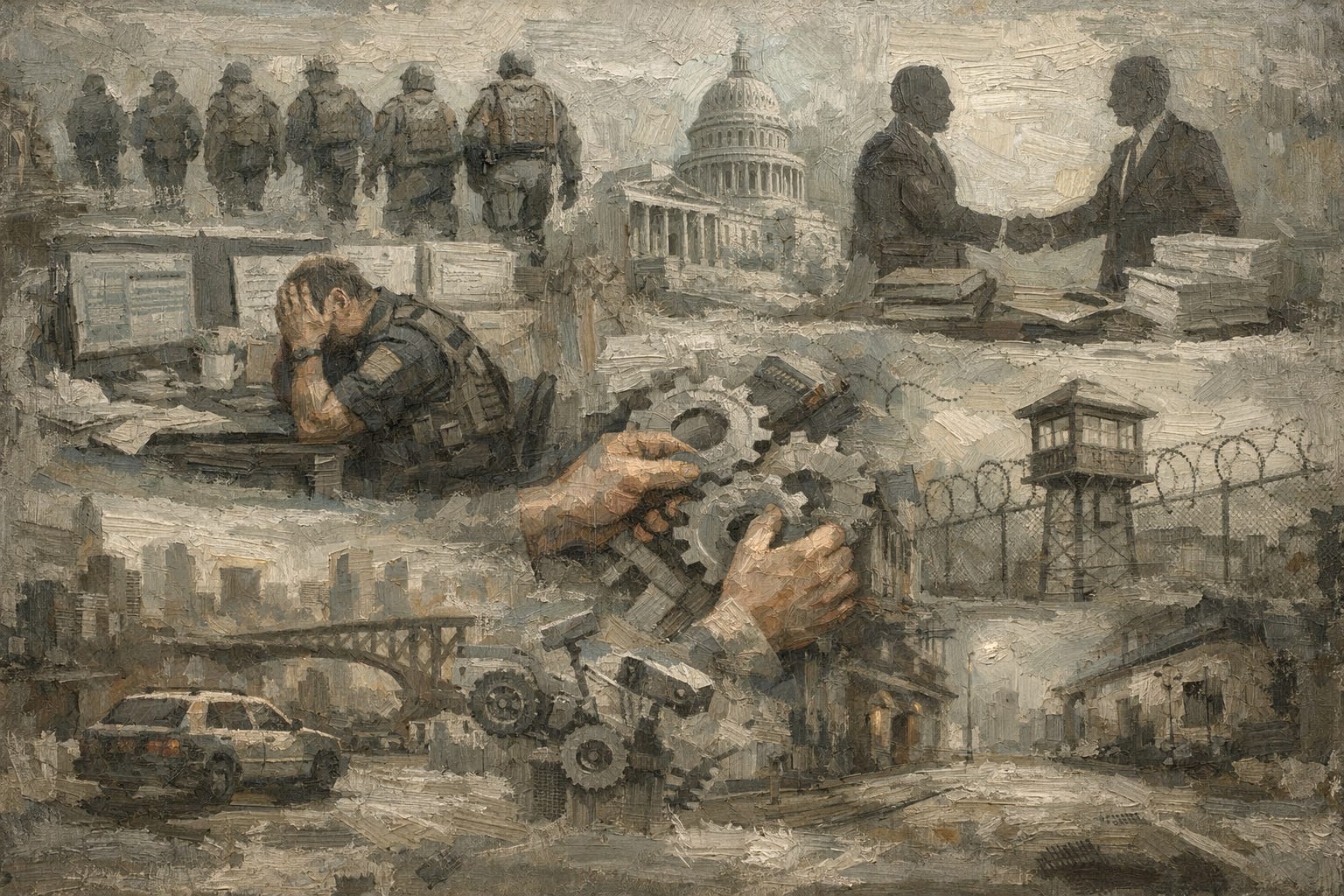
The administration confirmed it is pulling roughly seven hundred federal personnel out of the Minneapolis surge operation. Officials describe this as a redeployment rather than a reversal, emphasizing a shift away from street and workplace actions and toward detention based targeting, internal command restructuring, and oversight language. The distinction is deliberate. This is not framed as correction. It is framed as refinement.
At the same time, internal reporting points to visible strain inside the enforcement apparatus. Agent forums and internal channels describe chaotic deployments, unclear chains of command, rushed timelines, and a sense of political exposure without institutional protection. This is not ideological dissent. It is capacity stress. When systems strain under pressure, error rates rise and accountability becomes rhetorical rather than operational.
In Washington, Democratic leadership formally tied DHS and ICE funding to defined operational constraints. These include transparency requirements, visible identification standards, and limits on anonymous enforcement tactics. This marks a shift from protest language to leverage language. It does not halt enforcement. It attempts to place limits around it. Whether those limits endure remains unresolved.
State and Federal Tension
What stands out today is not escalation but calibration.
Federal authorities adjusted posture in Minnesota without disengaging. State and local leaders continue to contest legitimacy and proportionality, but the immediate temperature lowered. This is a pause in visible confrontation, not a settlement of authority.
No new state level flashpoints emerged in the last twenty four hours.
That absence carries information.
Minnesota
Minnesota remains the central pressure node.
The withdrawal of seven hundred personnel signals recognition of the political and operational cost of sustained visible force in an organized urban environment. At the same time, the stated move toward jail based targeting points to a quieter, potentially more durable enforcement approach.
This is a shift from spectacle to infrastructure.
This distinction makes a difference. It lowers visibility without reducing reach.
California
No material change in the last twenty four hours.
California continues to operate as a legal and administrative counterweight rather than a street level confrontation zone. The contest remains procedural and judicial.
Maine
No new developments today.
Earlier enhanced operations remain relevant context, but there is no fresh activity in the current window that alters posture or tempo.
Canada
No change.
Diplomatic and rhetorical positioning remains stable. No new border or trade escalations surfaced in this period.
Greenland
No change.
Prior tensions remain present, but there is no new movement affecting the perimeter today.
Europe
No change.
Alliance structures and security posture remain steady. No new indicators link European developments to the current domestic enforcement arc.
No Material Change
Several additional jurisdictions remain under watch without new activity. Federal authority is present but not expanding in those areas.
Stability (or quiet) here should not be mistaken for resolution.
What to Watch Next
Watch whether the Minnesota adjustment becomes precedent.
If similar drawdowns appear elsewhere under pressure, it signals institutional learning. If this remains isolated, it suggests containment rather than recalibration.
Watch DHS funding negotiations closely. If operational constraints soften or disappear quietly, congressional leverage will have proven thin.
Watch the spread of local jail based federal partnerships. These agreements scale quietly and multiply federal reach without visible deployments.
Where This Leaves Us
Today shows that pressure still changes behavior, but only when it is sustained, visible, and tied to institutional consequence.
Force did not pull back because it was persuaded. It adjusted because it was exposed.
The perimeter now is narrower, quieter, and more procedural. That is often how durable power prefers to operate.
Which means vigilance cannot relax simply because the streets appear calmer.
It has to become more precise.