

A Season of Hope
How Can I Live Next Year With a Little More Truth and a Little Less Fear

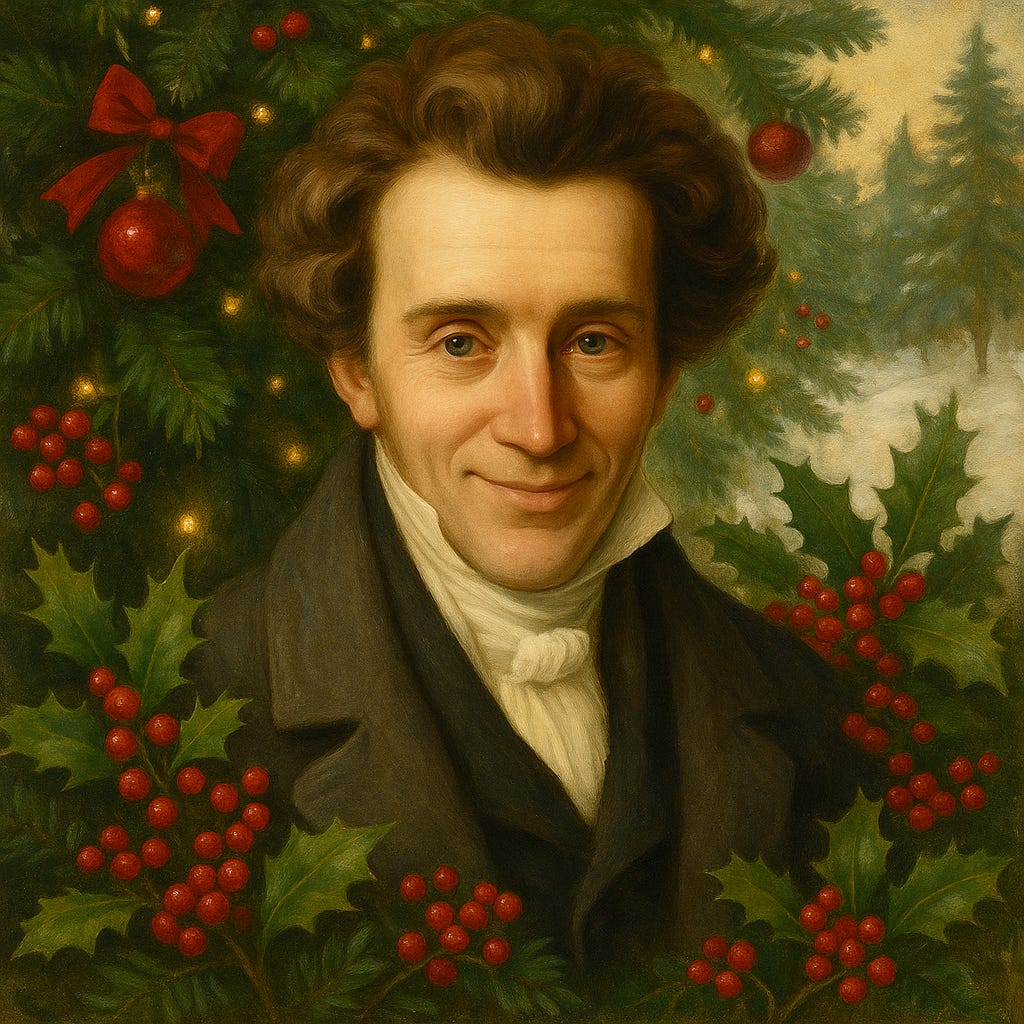
I’ve been carrying this question around like a warm stone in my pocket. Turning it over in my hand. Feeling its quiet weight as the year closes. How can I live next year with a little more truth and a little less fear. It sounds simple, but simple questions are rarely small ones. They tend to open into something larger than I expect, something I can’t quite control. And maybe that’s the point.
I found myself thinking about Kierkegaard this week. Not the heavy bookend version people joke about, but the man who believed that truth doesn’t matter unless it’s lived. He thought truth was something you step into with your whole weight. Something that either shapes your days or never really arrived in your life at all. I’ve lived enough years to know he was onto something. It’s easy to admire truth. It’s harder to let it take the room it needs inside your life.
So I ask myself again, quietly this time, what truth have I been postponing. There’s always one. Usually more than one. They tend to sit just off to the side of my attention, patient as spring soil. And the older I get, the more I suspect they aren’t waiting for clarity but for courage. Kierkegaard would probably smile at that. He thought fear and anxiety weren’t signs of weakness but markers that we’ve stepped close to the edge of possibility. That tremor in the chest, the unease in the stomach, the restless thinking at night. That’s the body knowing something in my life wants to change.
When I look back at this year, I can see the places where fear got ahold of me. Not dramatically. Not in ways anyone else would notice. More like a quiet tightening. A subtle bending of my choices. The things I put off. The truths I softened. The moments when I told myself I’d wait for a better time. There’s always a better time if I’m trying to avoid something important. And there’s never a better time when the world is asking me to live honestly.
Still, fear isn’t the villain here. Kierkegaard didn’t think so and neither do I. Fear is often a doorway disguised as a warning. It tells me that something meaningful is at stake. Something that will require me to live a little differently. Something that will ask me to be seen. Fear shows up right at the border between who I’ve been and who I could become. And every year, especially in December, I’m asked to decide which side of that border I’m willing to stand on.
I don’t need to banish fear next year. I’m not sure that’s possible, and I doubt it would make me wiser if it were. What I want instead is a gentler relationship with it. I want to hear what it’s pointing to rather than what it’s threatening. I want to notice how often fear disguises itself as practicality or caution or timing. I want to stop mistaking self-protection for wisdom. There’s a difference, and I know it when I’m honest with myself.
Truth, on the other hand, is a quieter companion. It doesn’t shout. It rarely insists. It waits for me to make space for it. Living with more truth next year probably won’t look heroic. It’ll look like small adjustments. Conversations I no longer avoid. Feelings I no longer rename. Boundaries I honor before they harden into resentment. Choosing the work that aligns with who I’m becoming instead of who I was supposed to be. Truth has always been patient with me. I’d like to return the kindness.
Kierkegaard talked about the leap. People tend to hear that word and think of drama, but I don’t. To me it sounds like choosing a more honest life before I feel ready. It sounds like stepping toward hope while fear still walks beside me. It sounds like trusting that the ground will rise a little to meet my foot when I lift it. I’ve lived enough years to know that readiness is often a myth. The only real preparation for living truthfully is to begin.
And hope, well, that’s its own kind of truth. Not a soft one. Not the Hallmark version. The kind of hope I’m talking about is an ethical stance. A way of saying I refuse to live as if despair gets the final word. A way of choosing possibility over paralysis. Hope is a discipline. If I’m lucky, a habit. It’s how I keep faith with the parts of myself that are still growing.
So how will I live next year with a little more truth and a little less fear. I think I’ll start by paying attention to what unsettles me. I’ll treat those moments as invitations rather than warnings. I’ll listen for the truths that have been waiting for me to stop running in circles. I’ll honor the small acts of courage I’ve been postponing. And I’ll remind myself that fear is only dangerous when I let it close the door.
Maybe that’s what this season has always been trying to tell us. That every ending is a threshold. That every threshold asks for honesty. That every honest step is a kind of hope.
And perhaps that’s enough to begin a new year.
Further reading:


Thank you my dear author friend, for your "Season of Hope"! But it's that subtitle that catches my attention to read on because though 2025 has been such a difficult year for so many of us, in such a disarray & different for each of us, WE all need to begin 2026 with a lot more truth and alot less fear, or reason to be so downtrodden. I guess you (or I) are not the only one - with this question, weight, or warm stone (as your opening draws us in & makes all of your heartfelt words so relatable). I hope that 2026 blesses you with much hope, peace, love & the joy of inspiring us to more hope of more change & more action of hopeful new beginnings with better results for more of us!
Happy Holidays & New Year! {while I have internet now in case I have issues again} Stay warm & well! Many blessings, Peggy